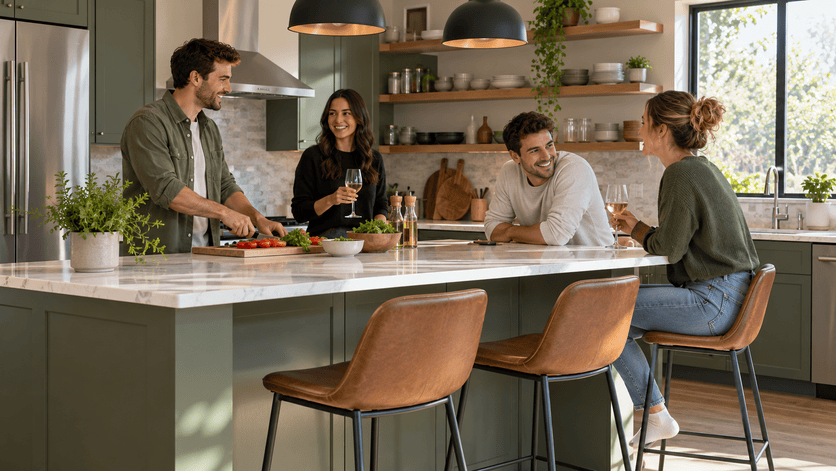
A small bathroom can feel luxurious with better lighting, useful storage, and matching finishes. You don’t need expensive materials or a completely new layout to make the room look and feel better.
The key is spending on changes that improve how the bathroom looks and works, rather than paying for features you don’t really need.
If you’re planning bathroom remodeling, start with the look you want. Then choose improvements that make the space more comfortable, practical, and easier to use.
1. Create a Luxurious Look With One Marble Element to Elevate the Whole bathoom
Choose one stone look surface as the main feature and keep the surrounding finishes simple. You don’t need natural marble on every wall to create an elegant, well-matched bathroom.
A shower wall with softly veined porcelain tile, for example, can give you a marble-inspired look without covering the entire room in stone.
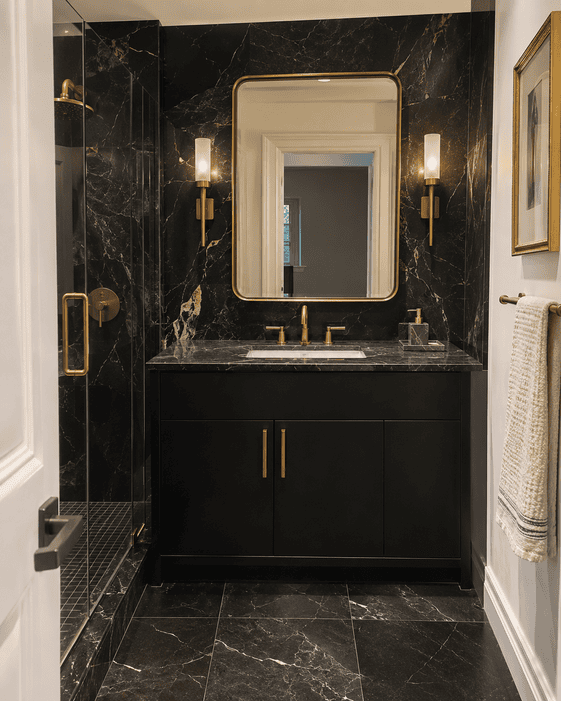
One well chosen stone-look surface can give a small bathroom an elegant finish without using marble throughout.
Get this look: Black marble look tiles, a matching dark vanity, a gold-framed mirror, and warm brass fixtures.
Why it works
- One standout finish gives the room a clear focal point.
- Simple surrounding colors allow the stone pattern to stand out.
Finishes to consider
- Softly veined porcelain tile for the shower walls.
- Ivory paint outside areas exposed directly to water.
- A light wood tone vanity with simple hardware.
Actionable tip: Keep decorative tile to one main area if it suits your design. Compare the full installed cost, including surface preparation and tile cutting, before choosing a finish.
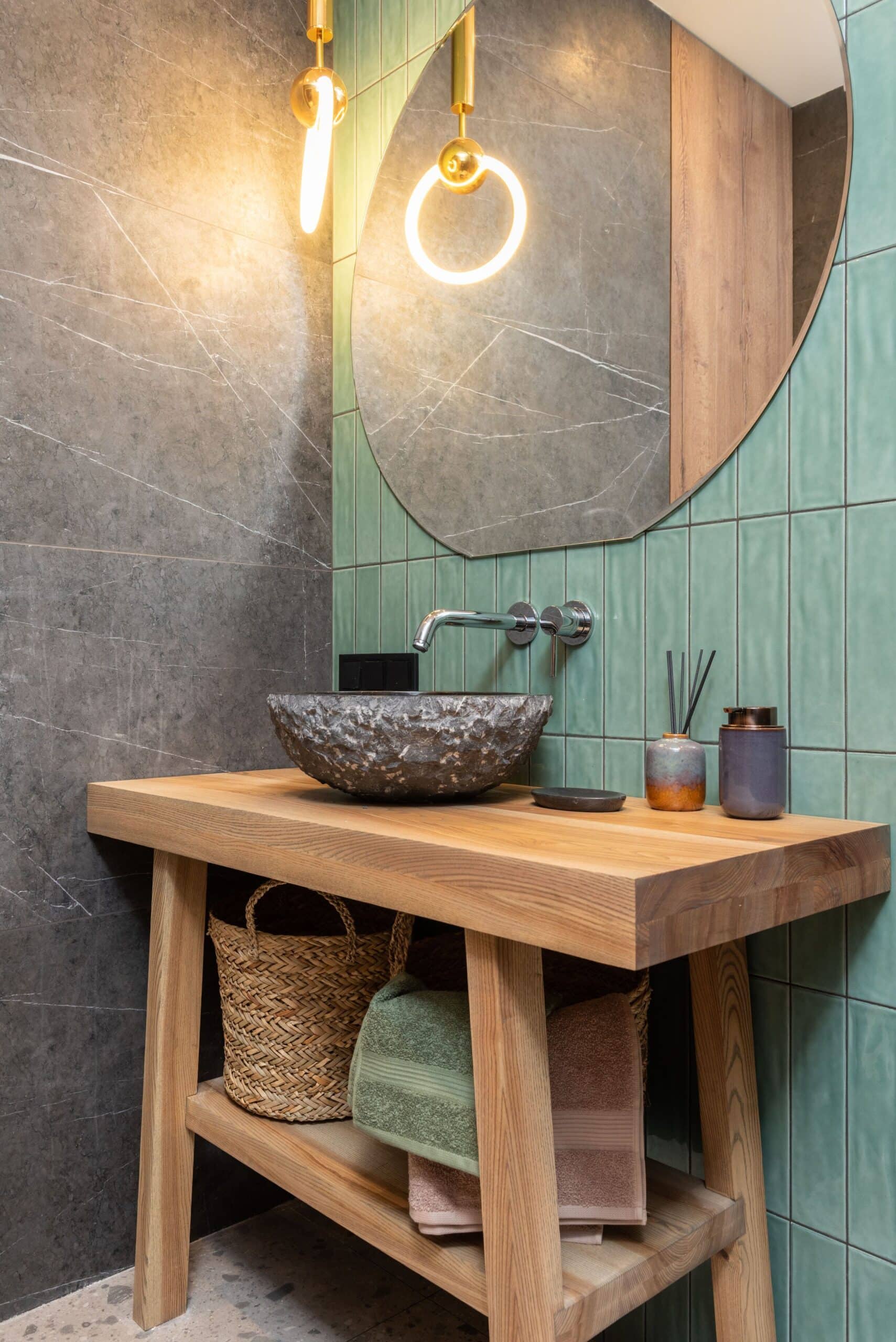
2. Give a Small Bathroom Depth With Darker Colors
Deep green or navy can make a small bathroom feel rich and welcoming. The key is balancing darker colors with a lighter sink, good mirror lighting, and a few matching details.
You don’t have to paint the entire room dark. Updating the vanity alone can make a noticeable difference, especially when the existing bathroom tile is still in good condition.
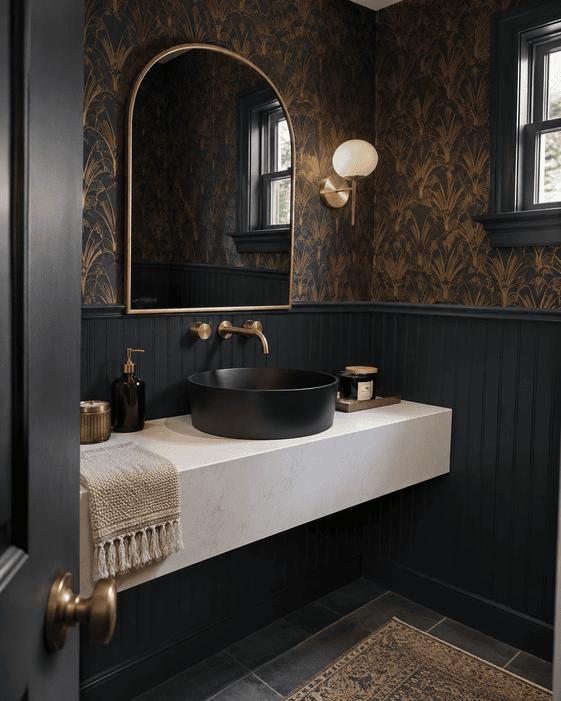
Giving an existing vanity a fresh color and updated handles can add a more luxurious feel without changing the bathroom layout.
Get this look: Deep navy wall paneling, dark patterned wallpaper, a white floating countertop, and warm brass accents.
Why it works
- Deep colors create a cozy, boutique hotel feeling.
- A light colored sink and good mirror lighting keep the room comfortable for everyday use.
Color combinations to try
- Deep green with ivory and warm metal accents.
- Navy with white and brushed nickel.
- A dark vanity with lighter walls for a smaller change.
Actionable tip: If your existing tile is in good condition, consider painting the vanity or suitable walls instead of replacing every surface.
3. Create a Spa Like Shower Without Adding a Bathtub
A spa-like bathroom doesn’t need a large soaking tub or an expensive shower system. A comfortable shower, warm finishes, and tidy storage can create a relaxing space even when the bathroom is small.
Start with the features you actually use. A handheld shower, reachable controls, and a convenient place for shampoo and soap can make daily bathing more comfortable.
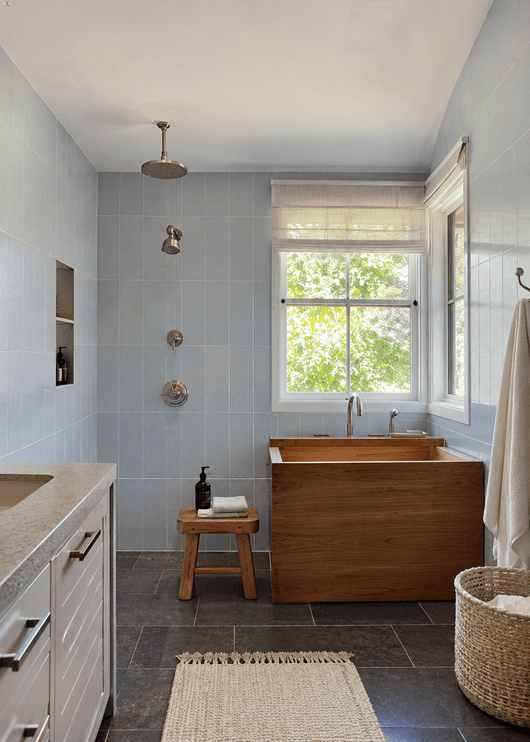
Warm tile, practical shower fittings, and simple storage help create a relaxing bathroom without adding unnecessary features.
Get this look: Soft neutral tile, comfortable shower controls, and uncluttered storage.
Why it works
- A clear, comfortable shower area makes bathing easier.
- Warm finishes and softer lighting help create a relaxing atmosphere.
Spa details worth considering
- A handheld shower that is easy to reach and use.
- Practical bottle storage and nearby towel hooks.
- A shower seat only if there is enough room and someone needs it.
Actionable tip: Start with useful storage, comfortable shower controls, and adjustable lighting before spending on extra showerheads or a built-in bench.
4. Make a Windowless Bathroom That Feel Bright and Welcoming
A bathroom without windows needs good lighting and finishes that keep the space from feeling dull.
Combine mirror lighting with a ceiling light that brightens the whole room. Cream-colored walls, light wood cabinetry, and simple finishes can make the bathroom feel warm and inviting without natural daylight.

Cream finishes, an oak-tone vanity, and practical lighting, a Colourful walpaper can make a bathroom without windows feel brighter and more welcoming.
Get this look: Soft botanical wallpaper, dusty blue cabinetry, white shower tiles, and classic brass fixtures.
Why it works
- General ceiling lighting brightens areas beyond the mirror.
- Cream and wood tones create warmth without relying on daylight.
Lighting and finish choices
- Good lighting around or above the mirror.
- A ceiling light suitable for the bathroom.
- Cream-colored surfaces with a wood-tone vanity.
Actionable tip: Check paint, tile, and cabinet samples under the lighting you plan to use. Make sure the room also has proper exhaust ventilation to help remove moisture.
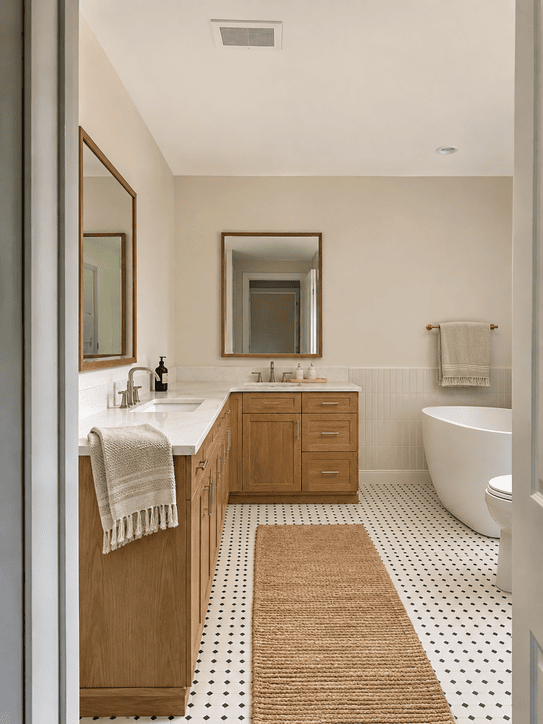
5. Choose a Vanity That Makes Better Use of Limited Space
A vanity that is too deep can make a narrow bathroom harder to move around.
A shallower vanity may give you more walking space. A floating vanity, which is mounted on the wall, can make the floor look more open. However, it doesn’t create extra standing room if the cabinet sticks out just as far.
The best choice depends on the space available and how much storage you need.
A compact vanity can make a small bathroom look more open, but cabinet depth determines how much walking space is available.
What to notice: A vanity with practical drawers and enough room to move around comfortably.
Why it works
- A shallower cabinet can leave more room to walk past.
- Useful storage helps keep everyday items off the countertop.
Vanity options to compare
- A shallow single-sink vanity for a narrow bathroom.
- A floating vanity where showing more floor suits the design.
- A refreshed existing cabinet if its size and condition already work well.
Actionable tip: Measure the cabinet depth and check the storage space before buying. Mounting a vanity on the wall doesn’t give you extra standing room if the cabinet depth stays the same.
6. Improve Bathroom Clearance Without Moving Every Fixture
Sometimes, a small bathroom feels cramped because a door, cabinet, or drawer gets in the way.
Before moving the toilet or shower, look for the actual problem. A smaller vanity or a different door arrangement may make the room easier to use without major plumbing changes.
For example, if the bathroom door opens against the vanity, changing the cabinet size or door swing may be worth considering.
A simple layout review can help identify doors or cabinets that block movement before larger remodeling changes are considered.
What to notice: A clear path between the doorway, sink, and bathing area.
Why it works
- Removing an obstruction makes the bathroom easier to move around in.
- A small layout change may avoid the expense of moving several fixtures.
Layout changes to compare
- A smaller vanity when the cabinet sticks out too far.
- A different bathroom door arrangement when space allows.
- A shower door that opens comfortably within the available space.
Actionable tip: Draw the bathroom door, shower door, and vanity drawers in their fully open positions. Check whether they overlap or block the walkway before choosing replacements.
7. Make an Existing Tub and Shower Combination Feel Luxurious
An existing tub-and-shower combination can still look elegant. You don’t need to remove a bathtub simply because walk-in showers are popular.
If the tub is in good condition and suits your needs, matching wall tile, practical storage, and a well-fitted curtain or glass screen can give it a more finished appearance.
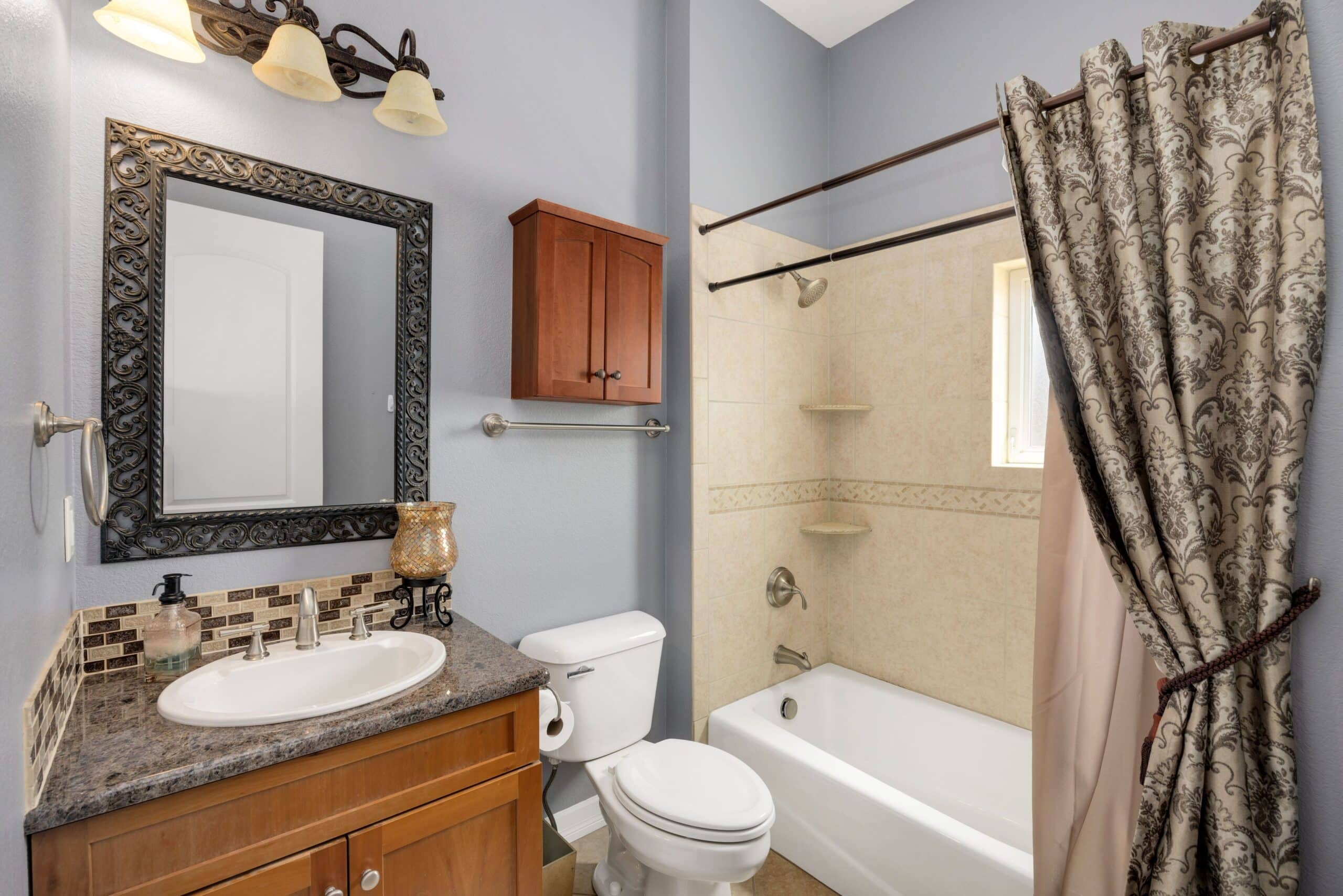
A neatly fitted shower curtain and matching finishes can make an existing bathtub feel like a planned part of the bathroom design.
Get this look: A retained alcove tub, coordinated finishes, and a tailored curtain.
Why it works
- Matching finishes make the bathtub feel like part of the overall design.
- Keeping a useful bathtub preserves bathing options.
Details that lift a tub-and-shower combination
- Simple wall tile with matching grout.
- A neatly fitted shower curtain and liner or a suitable glass screen.
- Convenient bottle storage and coordinated shower fittings.
Actionable tip: Compare the cost and benefits of keeping a sound bathtub with replacing it. Converting it into a shower changes how you use the space, but doesn’t necessarily create more walking room outside the bathing area.
8. Choose Between Shower Glass and a Well-Fitted Curtain
Glass and shower curtains can both look attractive when they suit the bathroom.
Clear glass makes the shower area more visible, which can help a small room feel open. A well-chosen curtain offers more privacy and may cost less initially than custom glass.
Neither option is automatically better. Think about the room layout, how you use the shower, and how much cleaning you’re comfortable with.
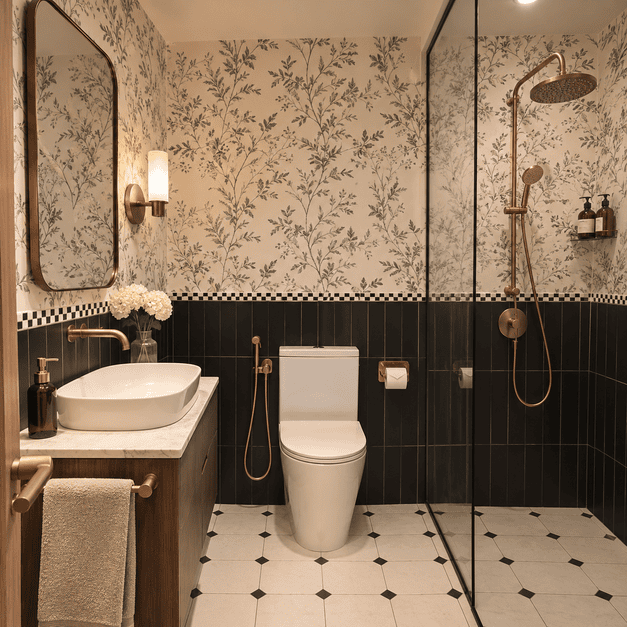
A clear shower screen keeps the bathing area visible, while a well-fitted curtain offers another practical option for privacy and flexibility.
What to notice: A shower enclosure that suits the available space, privacy needs, and cleaning preferences.
Why it works
- Clear glass keeps the back of the shower visible.
- A well-chosen curtain can add softness, color, and privacy.
Enclosure options to compare
- Clear glass when you want the shower area to remain visible.
- A tailored curtain with a suitable liner for a tub-and-shower combination.
- An open shower entrance only where the layout can keep water from spreading outside.
Actionable tip: Check how much space you need to enter and clean the shower, not just how the enclosure looks. Custom glass and open-shower designs can involve additional work.
9. Keep Cleaning Simple With Practical Bathroom Finishes
A beautiful bathroom should also be easy to clean.
Choose surfaces you can reach, cabinet doors with simple details, and a countertop that doesn’t collect clutter. Avoid narrow gaps around fixtures where cleaning becomes difficult.
Simple choices can make everyday maintenance easier without making the bathroom look plain.
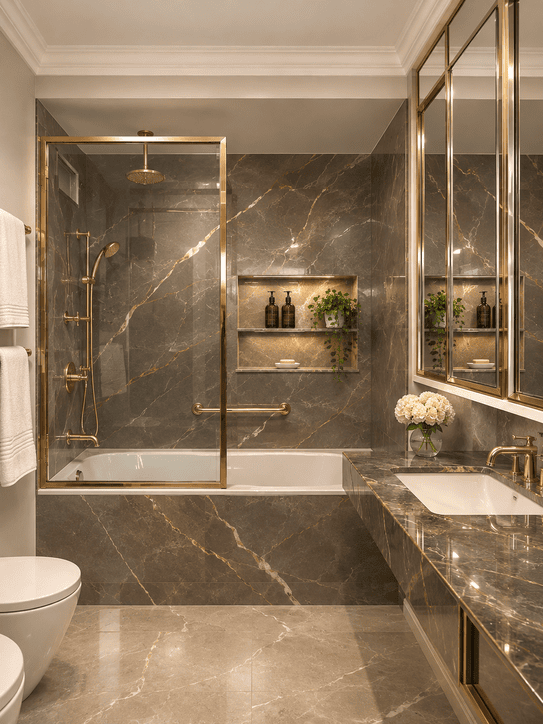
Smooth surfaces, simple fittings, and accessible spaces help make everyday bathroom cleaning more manageable.
Get this look: Simple cabinet fronts, easy-to-reach surfaces, and a clear countertop.
Why it works
- Surfaces that are easy to reach are easier to wipe thoroughly.
- Fewer awkward edges and less clutter make cleaning simpler.
Details to look for
- Smooth cabinet fronts instead of deep decorative grooves.
- A simple connection between the sink and countertop.
- Floor areas and spaces around fixtures that are easy to reach.
Actionable tip: Think about how you would clean behind the faucet and beside the toilet. A narrow decorative gap may look attractive at first but become frustrating to clean later.
10. Make the Most of Vanity Drawers and Hidden Storage
Good storage can make a small bathroom feel more organized without adding more cabinets.
Vanity drawers are useful for everyday items, while a mirror cabinet can keep smaller toiletries out of sight. Shower shelves or built-in niches can hold bottles close to where you need them.
The goal is to give everyday items a convenient place without crowding the sink or floor.
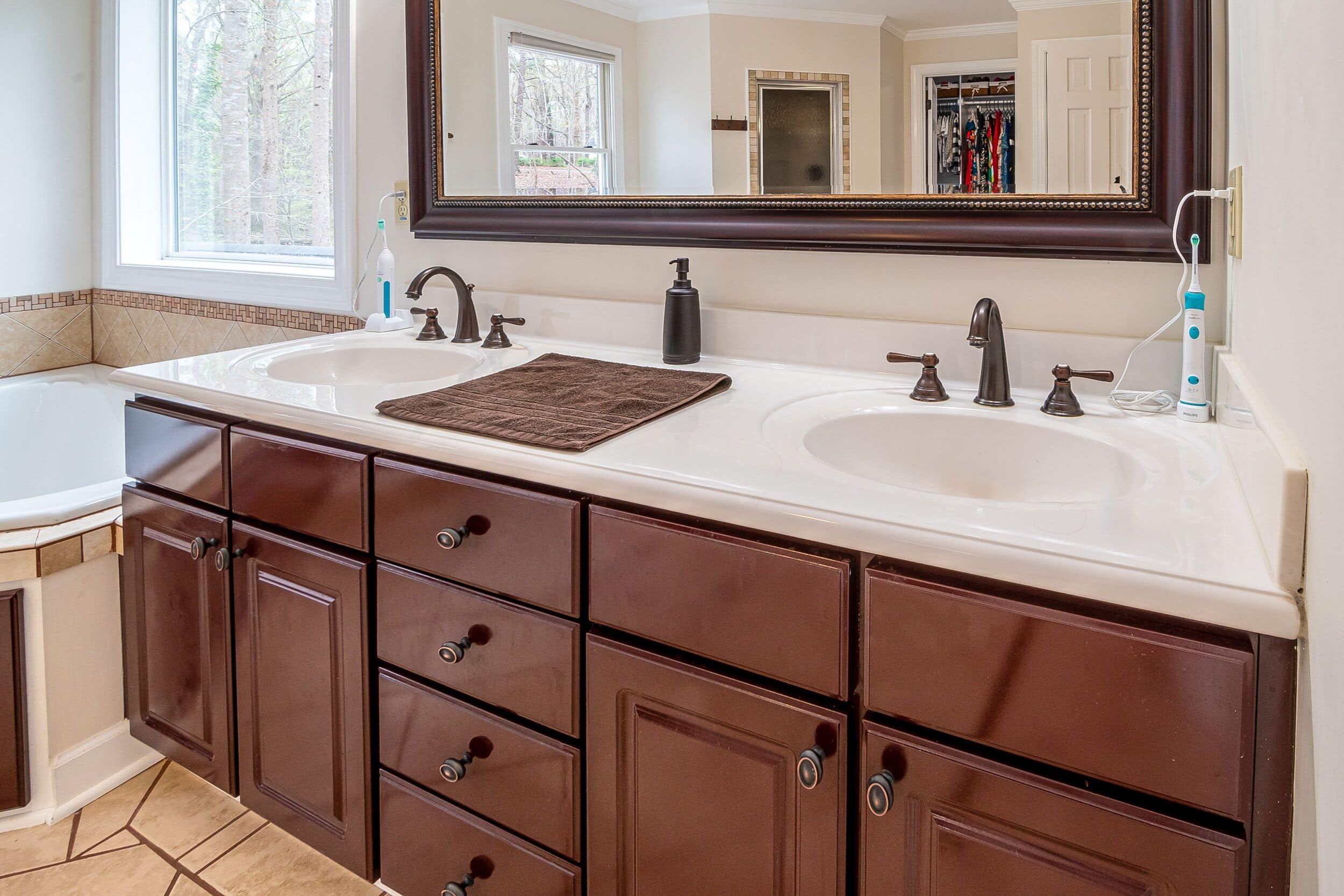
A vanity with practical drawers keeps bathroom essentials organized and helps reduce countertop clutter.
Get this look: Hidden everyday storage with essentials close to hand.
Why it works
- Hidden storage gives everyday items a proper place.
- Keeping essentials within reach reduces the need for extra countertop organizers.
Storage options to compare
- Vanity drawers designed to fit around the sink plumbing.
- A mirror cabinet for small toiletries and grooming items.
- A shower shelf or built-in niche sized for the bottles you use.
Actionable tip: Measure your tallest bottles and everyday items before choosing storage. If you want a built-in shower niche, check that the wall has enough space and can be properly waterproofed.
11. Create a Calmer Bathroom With Subtle Tile and Soft Grout
A simple tile pattern and grout that is close to the tile color can help a small bathroom feel calmer.
Grout is the material between tiles. When it blends with the tile, the wall looks more continuous instead of showing a strong grid of lines.
Larger tiles are one way to achieve this look, but smaller tiles can work just as well when the pattern and colors are carefully chosen.
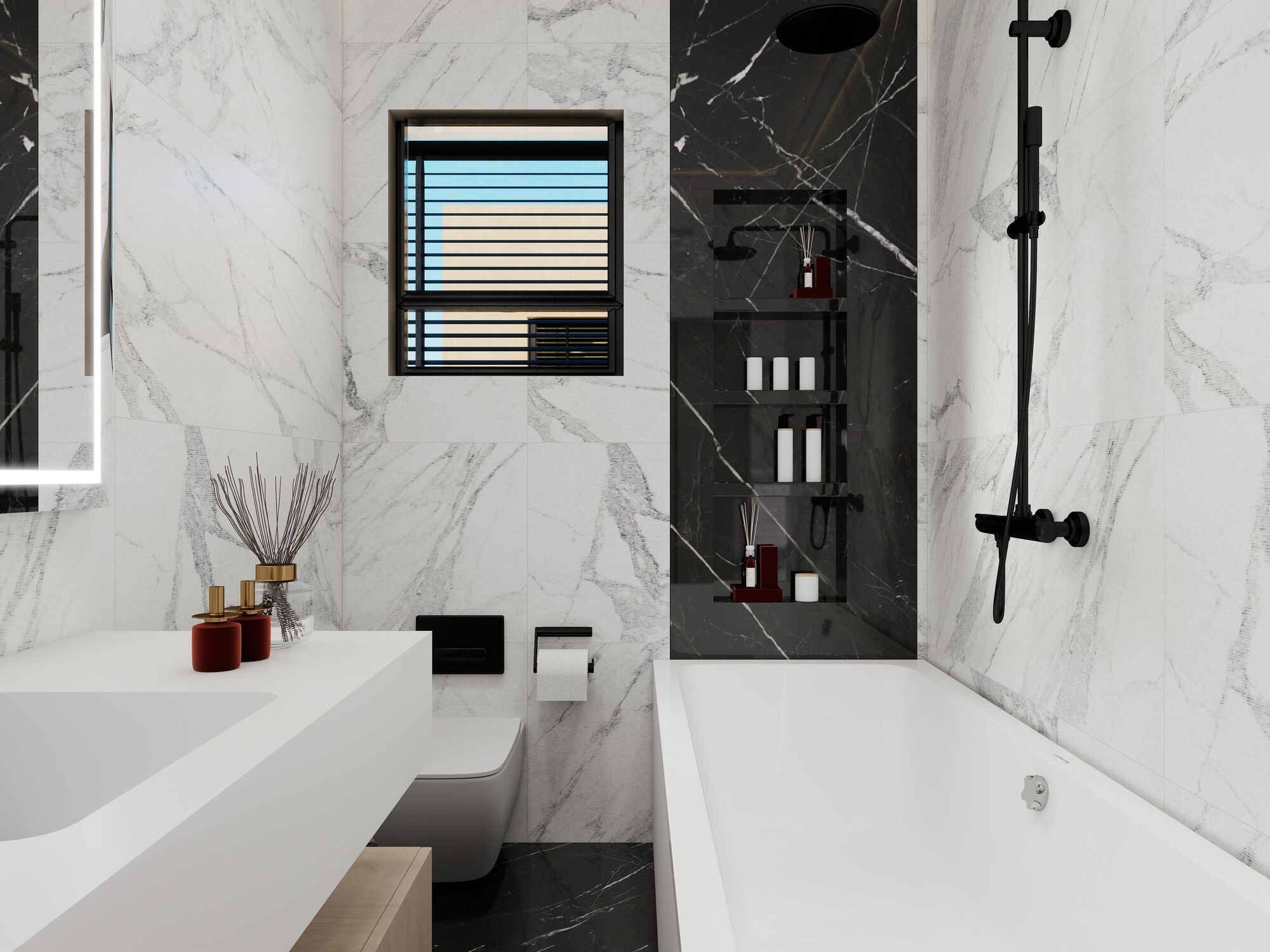
Subtle tile patterns and low contrast grout can make bathroom walls feel more connected and less visually busy.
Get this look: Quiet tile patterns and grout that blends into the surface.
Why it works
- Fewer grout lines can make a wall look less busy.
- Similar tile and grout colors help the surface look more continuous.
Wall tile choices to compare
- 12 × 24-inch porcelain tile for a simple rectangular pattern.
- 24 × 24-inch tile where the wall size allows a clean layout.
- Large porcelain panels for fewer visible seams, although these need specialist handling and installation.
Actionable tip: Choose grout close to the tile color for a calmer look. Select shower floor tile separately to suit the floor slope, drainage, and slip-resistance requirements.
12. Make an Ordinary Vanity Feel Premium With Better Lighting
Good lighting around the mirror can make a simple bathroom vanity look more carefully designed.
Start with lighting that helps you see your face clearly. Wall lights beside the mirror, also called sconces, can work well when there is enough space. A suitable light above the mirror is another practical choice.
Decorative lighting can look attractive, but it shouldn’t be the only source of light you depend on for grooming.
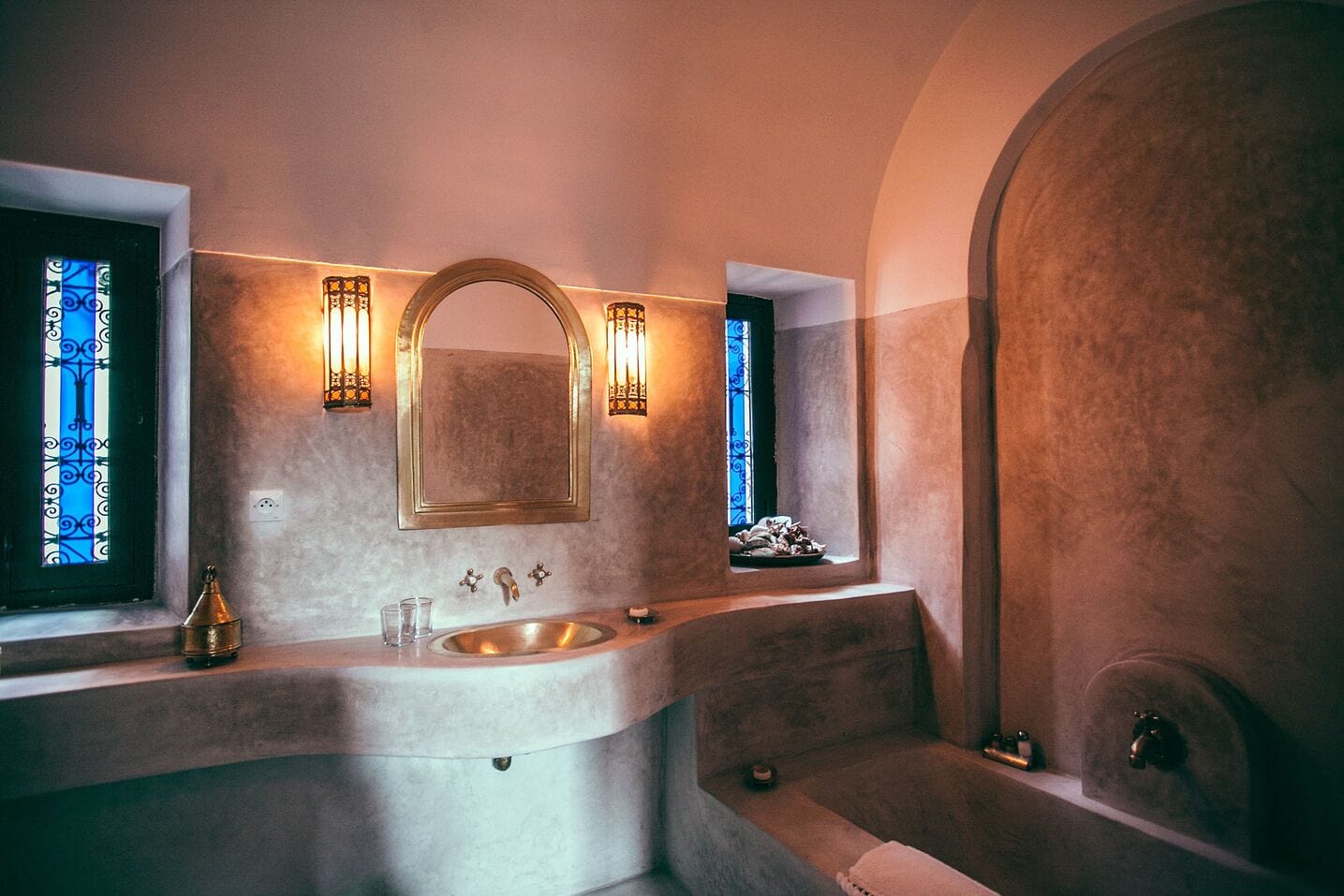
Well placed mirror lighting can make a simple vanity look more finished while helping with everyday grooming.
What to notice: A mirror that fits the vanity and lighting that reaches your face.
Why it works
- Good face lighting makes everyday grooming more comfortable.
- A mirror that fits the vanity gives the space a more finished appearance.
Mirror and lighting options
- A framed mirror that suits the size of the vanity.
- Wall lights beside the mirror when there is enough space.
- A suitable light above the mirror when side lighting isn’t practical.
Actionable tip: Check how well the lighting reaches your face, not just how the mirror looks. Decorative backlighting alone may not provide enough light for everyday grooming.
13. Add Personality With One Affordable Statement Feature
A small bathroom doesn’t need several expensive design features to feel unique.
Choose one detail that gives the space character. It could be a painted vanity, an interesting mirror, or a patterned wall. Keep the surrounding finishes simpler so the room still feels balanced.
For example, a blue vanity with a patterned wall behind the mirror can create a distinctive look without requiring custom cabinetry throughout the room.
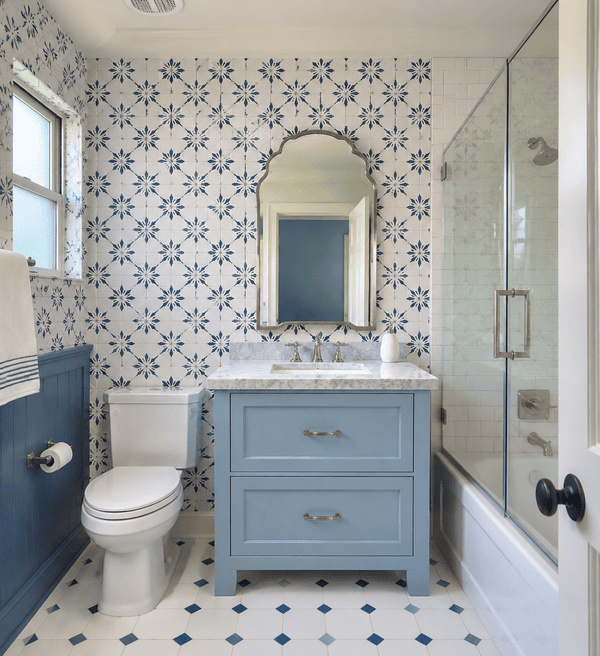
A painted vanity, distinctive mirror, and carefully chosen wall pattern can give a small bathroom personality without changing every fixture.
Get this look: One standout feature balanced by simpler surrounding finishes.
Why it works
- One standout feature gives a small bathroom personality.
- Simple surrounding finishes keep the design from feeling too busy.
Character details to try
- A fresh paint color on an existing vanity worth keeping.
- A distinctive mirror with practical lighting.
- A small area of patterned wallpaper or another suitable wall finish outside direct shower exposure.
Actionable tip: If your existing vanity is in good condition, consider keeping it and spending on paint, a mirror, or a feature wall. Choose wall materials that can handle the moisture and splashes expected in that location.
14. Bring the Design Together With Coordinated Finishing Details
Small details can make a bathroom feel more complete.
Choose cabinet handles, faucets, mirrors, and towel hooks that look good together. They don’t need to be exactly the same color or finish, but they should feel like part of one design.
Also think about where you place them. A towel hook is more useful when you can comfortably reach it after washing or bathing.
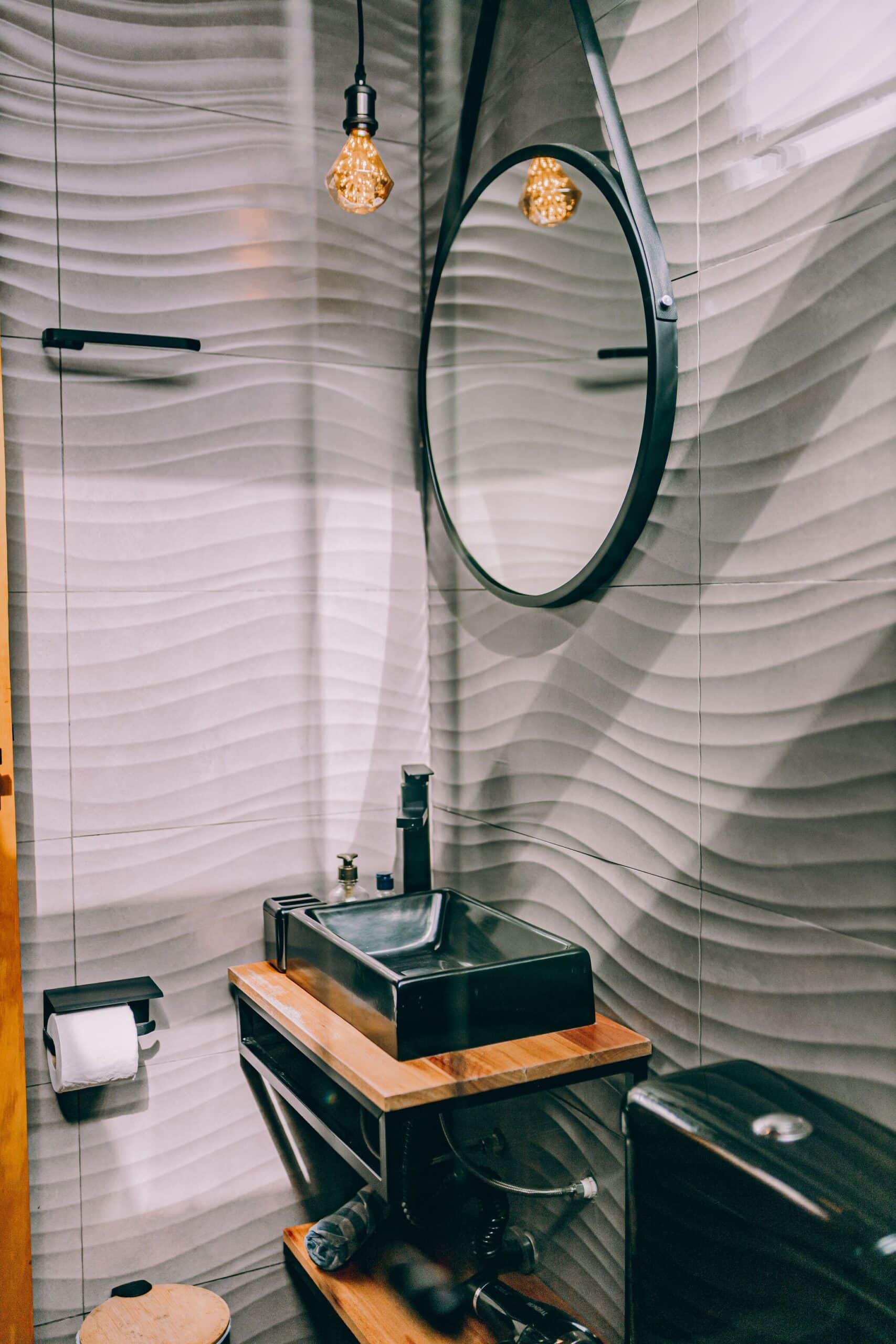
Matching the style of faucets, cabinet hardware, and useful accessories can help bring the bathroom design together.
Get this look: Related metal finishes and conveniently placed everyday fittings.
Why it works
- Repeating similar finishes helps separate purchases look connected.
- Convenient towel and accessory placement makes the bathroom easier to use.
Small upgrades to consider
- Cabinet handles that complement the faucet.
- A mirror frame that works with the other fittings.
- Towel hooks within comfortable reach.
Actionable tip: Compare finish samples together before ordering. They should look good beside one another, but every metal finish doesn’t have to match exactly.
15. Plan an Affordable Small Bathroom Remodel Around What Matters Most
The best bathroom upgrades aren’t always the most expensive ones.
Keep fixtures and materials that are still in good condition and work well. Replace anything that makes the space difficult to use, and save major construction work for problems that genuinely need it.
A fresh vanity color may be enough for one bathroom. Another may need a new shower because the existing waterproofing has failed. The right budget depends on what actually needs to change.
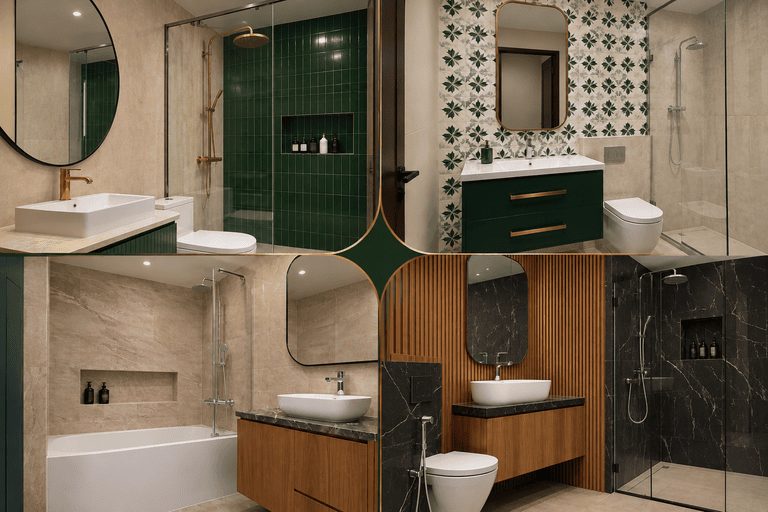
Different bathroom styles can inspire your remodel, but the best choice is the one that fits your space, needs, and budget.
What to notice: The look you prefer and the improvements your bathroom actually needs.
Why it works
- Keeping useful fixtures and materials can leave more money for other improvements.
- Fixing the real problem helps avoid spending on features that add little value.
Choose the scope that fits
- Refresh: Update paint, hardware, lighting, or accessories when the layout and main surfaces already work.
- Replace: Change fixtures or cabinets that no longer work well or take up too much space.
- Rebuild: Plan more extensive work when the shower, waterproofing, or layout needs major changes.
Actionable tip: Choose the look you want, then list the changes needed to achieve it. Don’t spend on decorative upgrades while leaving important repairs or waterproofing problems unresolved.
Frequently Asked Questions
Can the existing bathroom floor stay?
Sometimes. It depends on the floor’s condition, whether new fixtures will fit the same spaces, and whether plumbing or shower work will disturb the flooring.
Check these details before deciding that keeping the floor will save money.
Can the remodel be done in stages?
Yes, as long as one stage doesn’t require undoing work completed earlier.
Painting and accessories can often be updated separately. Work involving waterproofing, plumbing, or tile is usually better planned together so you don’t have to remove new finishes later.
Does every bathroom wall need tile?
No. Walls exposed directly to shower water need suitable waterproofing and a proper wet-area finish.
Other bathroom walls may only need moisture-suitable paint or another appropriate finish, depending on how much water and moisture they are exposed to.
Can I use a powder room photo as inspiration?
Yes. Powder room photos can provide useful ideas for colors, mirrors, lighting, and decorative details.
However, a powder room usually doesn’t have the same shower moisture and splashes as a full bathroom. Make sure the wallpaper, cabinetry, and other materials you choose are suitable for where they’ll be installed.